
Find Arizona Death Records
The Arizona death index contains records from 1870 to the present day. You can search these records through the Bureau of Vital Records in Phoenix or at any of the 15 county vital records offices. The state genealogy database at genealogy.az.gov offers free access to death certificates that are at least 50 years old. More recent records require proof of eligibility under Arizona law. Both online and in-person options exist for obtaining certified copies of death certificates.
Arizona Death Records Quick Facts
Bureau of Vital Records
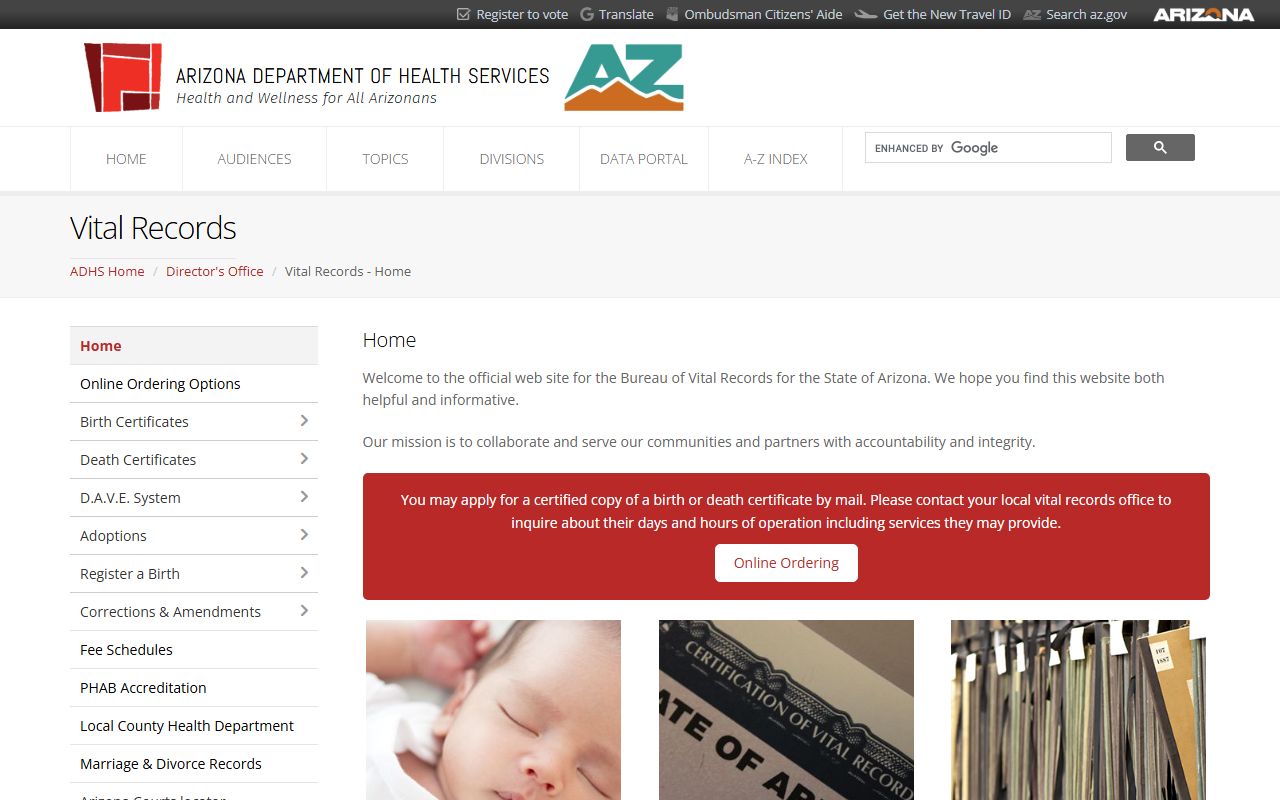
The Arizona Department of Health Services runs the Bureau of Vital Records. This office keeps all death records filed in Arizona since statehood. The bureau does not offer walk-in service. You must order by mail or use a county office. The main location sits at 150 North 18th Ave., Ste. 120, in Phoenix. Mail goes to PO Box 6018, Phoenix, AZ 85005. Call them at 602-364-1300 during business hours.
Each certified copy costs $20. You pay $30 for corrections or amendments. Processing takes five to ten business days for most mail orders. The bureau improved their speed in recent years. It used to take a month. Now most requests finish in under a week. You can also use VitalChek at 888-816-5907 for faster service with extra fees.
The bureau operates Monday to Friday from 8:00 a.m. to 5:00 p.m. They close on weekends and state holidays. Staff members speak English and can help with questions about the death index. If you have hearing or speech challenges, call 711 for Relay services in Arizona.
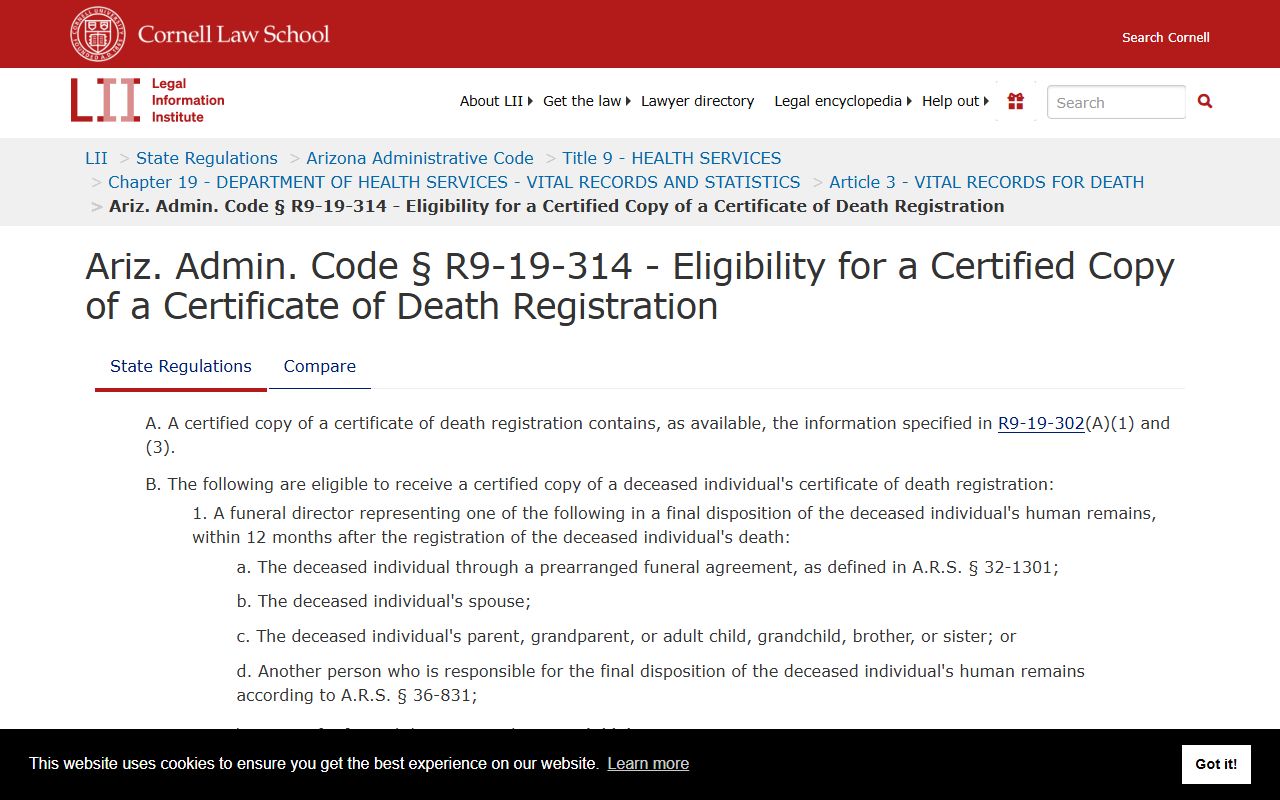
Only certain people can get copies of recent death records. Arizona Administrative Code R9-19-314 lists who qualifies. Family members can order certificates. This includes spouses, parents, grandparents, adult children, grandchildren, brothers, and sisters. Funeral directors can order within 12 months of the death. Attorneys representing eligible persons can also request copies. Insurance companies, banks, and hospitals with claims against the estate qualify too. Anyone with a court order can obtain a copy.
County Vital Records Offices
All 15 Arizona counties maintain vital records offices. These locations handle death certificates for the entire state, not just their own county. You can walk into any county office and order a death certificate from anywhere in Arizona. Most counties offer same-day service if the record is available in the database. Some counties take longer. Processing times vary from same day in Graham County to two weeks in Mohave County.
County offices accept various payment methods. Most take cash, money orders, and credit cards. Personal checks work at some locations but not all. Apache County does not accept cash at all. Greenlee and La Paz Counties do not take credit cards. Yavapai County accepts every payment type including personal checks. Fees stay the same across counties. The state sets the price at $20 per certified copy and $30 for amendments.
Maricopa County has five vital records locations across the Phoenix metro area. You can visit offices in Phoenix, Mesa, Peoria, Glendale, or Goodyear. Pima County serves Tucson with two locations. Other counties typically have one main office. Some offer satellite locations on certain days. Coconino County works by appointment only. Most other counties accept walk-ins during posted hours.
Note: County offices in Arizona provide certified copies for deaths that occurred anywhere in the state.
Arizona Genealogy Database
The state runs a free genealogy database at genealogy.az.gov. This system holds death records from 1870 through 50 years ago. Anyone can search without restriction. You do not need to prove relationship or eligibility. The database serves researchers, family historians, and anyone interested in Arizona genealogy.
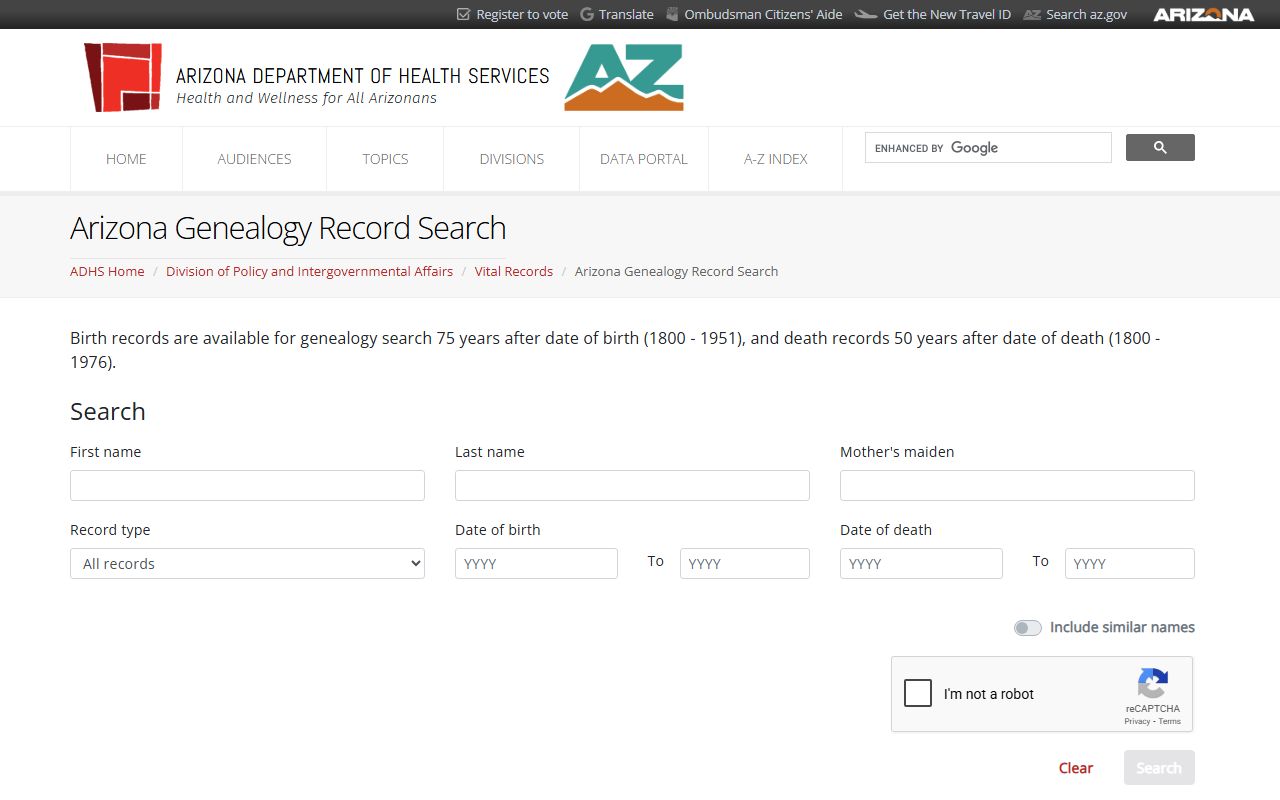
Records become public 50 years after the date of death. This follows Arizona Revised Statutes Section 36-351. The law requires the Bureau of Vital Records to transfer old certificates to the Arizona State Library, Archives and Public Records. Birth records transfer after 75 years. Death records transfer after 50 years. The genealogy database makes these old records searchable online at no cost.
You can search by name, date range, or location. The system shows scanned images of the original certificates. These are non-certified copies suitable for genealogy research. If you need a certified copy of an old death record, contact the bureau or a county office. They can produce certified copies for a $20 fee. Most genealogy users only need the free database images for their research projects.
D.A.V.E. Electronic Filing
Arizona uses a web system called D.A.V.E. for death registration. Medical certifiers, funeral homes, and medical examiners file death data electronically. The name stands for the digital platform that replaced paper forms. Funeral directors enter the basic information about the deceased person. The medical certifier then logs in to add cause of death information. The system validates everything and registers the record automatically.
Funeral homes can order certified copies through the D.A.V.E. portal. They pay just $6.00 for the first seven copies, which includes copies for Social Security and Veterans Affairs. This lower fee only applies to deaths they registered in the system. They must place the order within one year from the date of death. Regular pricing applies after that window closes.
Arizona law Section 36-325 requires funeral establishments to submit death certificates within seven calendar days. They must obtain the decedent's social security number and other key details. The certificate goes to a local registrar, deputy local registrar, or the state registrar for final processing. This seven-day rule keeps the death index current and accurate across Arizona.
The D.A.V.E. Help Desk operates Monday through Friday from 8:00 a.m. to 5:00 p.m. Call 602-364-2230 for technical support. You can also email BVRSupport@azdhs.gov with questions about the system. The help desk does not assist the general public with ordering copies. They only support funeral homes and medical certifiers using the electronic filing platform.
Arizona Death Record Laws
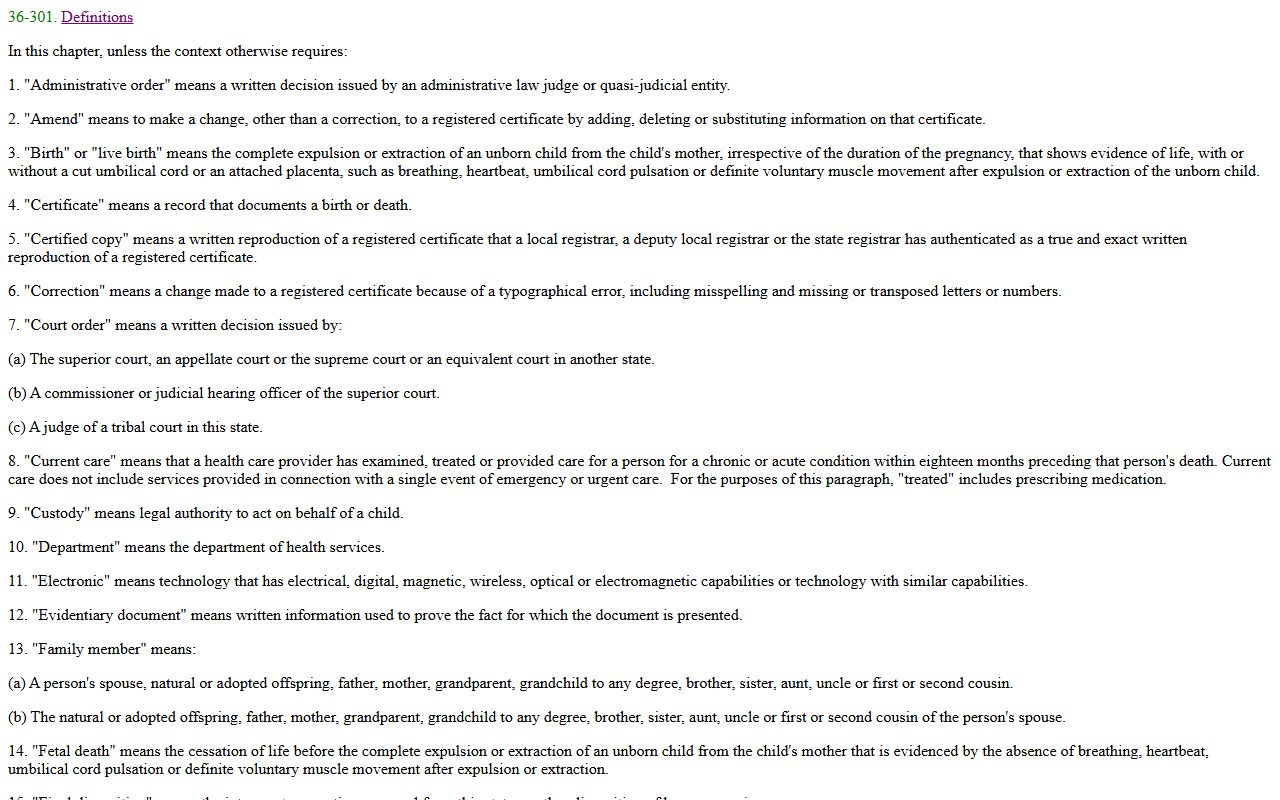
State law governs how death records work in Arizona. Arizona Revised Statutes Title 36, Chapter 3 covers vital records. Section 36-301 defines key terms. A certificate means a record that documents a birth or death. A certified copy is a written reproduction authenticated by a local registrar or state registrar. Vital records include all registered birth and death certificates maintained by the state.
Section 36-324 controls access to vital records. The state registrar provides copies to government agencies for official purposes. Records used in public proceedings must be sealed by the court or hearing officer. This protects sensitive information from unnecessary disclosure. Arizona is a closed record state. Vital records are not public documents open to anyone.
Section 36-342 prohibits unauthorized disclosure. Local registrars and state registrars cannot permit inspection of vital records except as authorized by law. They cannot disclose information or issue copies without proper legal authority. Violations of these rules can result in penalties. The law protects privacy while allowing legitimate access for family members and others with valid need.
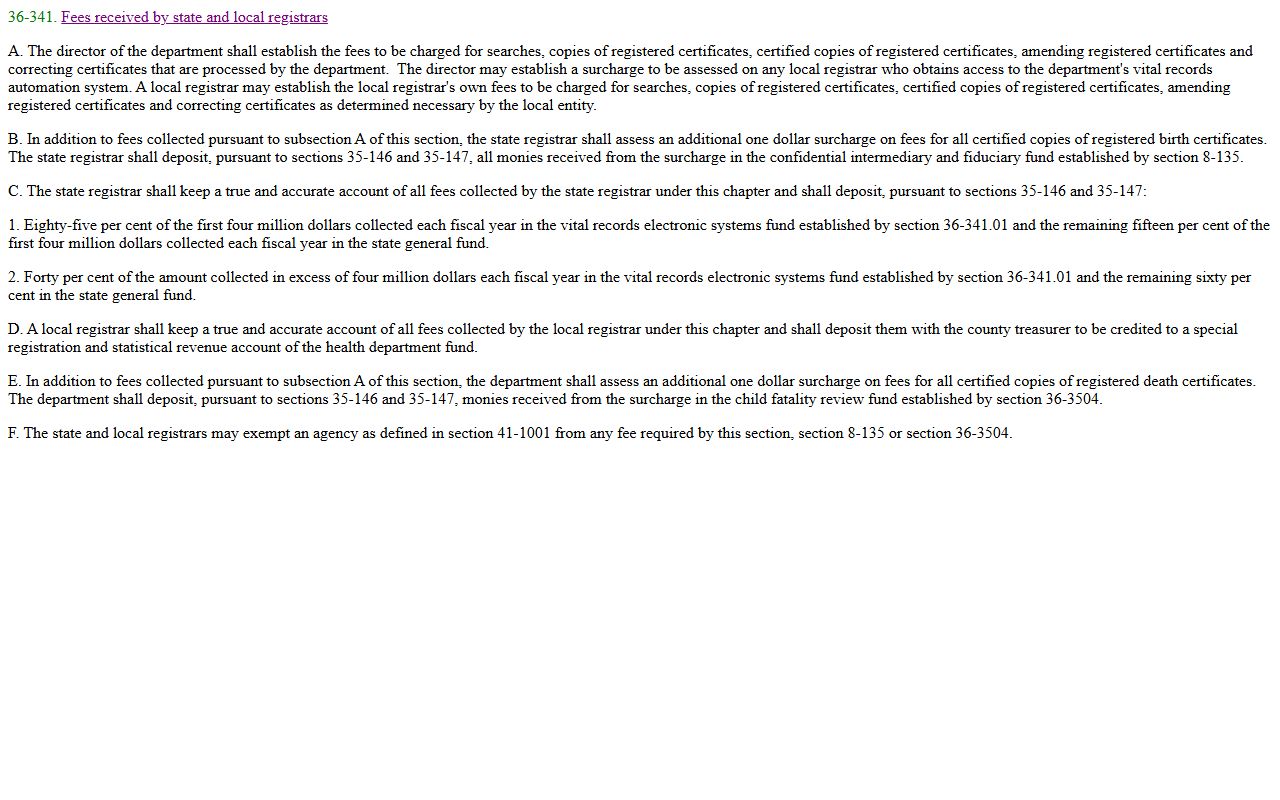
Fee rules appear in Section 36-341. The director of the health department sets fees for searches, copies, certified copies, amendments, and corrections. Local registrars can establish their own fees as well. The state assesses a one dollar surcharge on all certified death certificates. This surcharge goes into a designated fund. County fees generally match state pricing across Arizona.
Eligibility Requirements
The Arizona Administrative Code Section R9-19-314 lists all eligible persons. Funeral directors representing someone in final disposition can obtain copies within 12 months of registration. A surviving spouse qualifies. Parents and grandparents qualify. Adult children, grandchildren, brothers, and sisters qualify. Anyone with power of attorney can request a copy.
People responsible for final disposition under state law can obtain certificates. Executors named in a will qualify. Beneficiaries named in a will or life insurance policy can get copies. Anyone with a court order has access. Attorneys representing eligible persons can act on their behalf. Foreign consulates representing eligible persons may also request copies for their nationals.
Organizations with financial claims qualify too. Insurance companies with policies on the deceased can order certificates. Banks, credit unions, and mortgage lenders with accounts in the deceased person's name have access. Hospitals and health care institutions processing estate claims can get copies. Anyone with a claim against the estate qualifies. Government agencies processing benefits or financial claims can obtain records for official purposes.
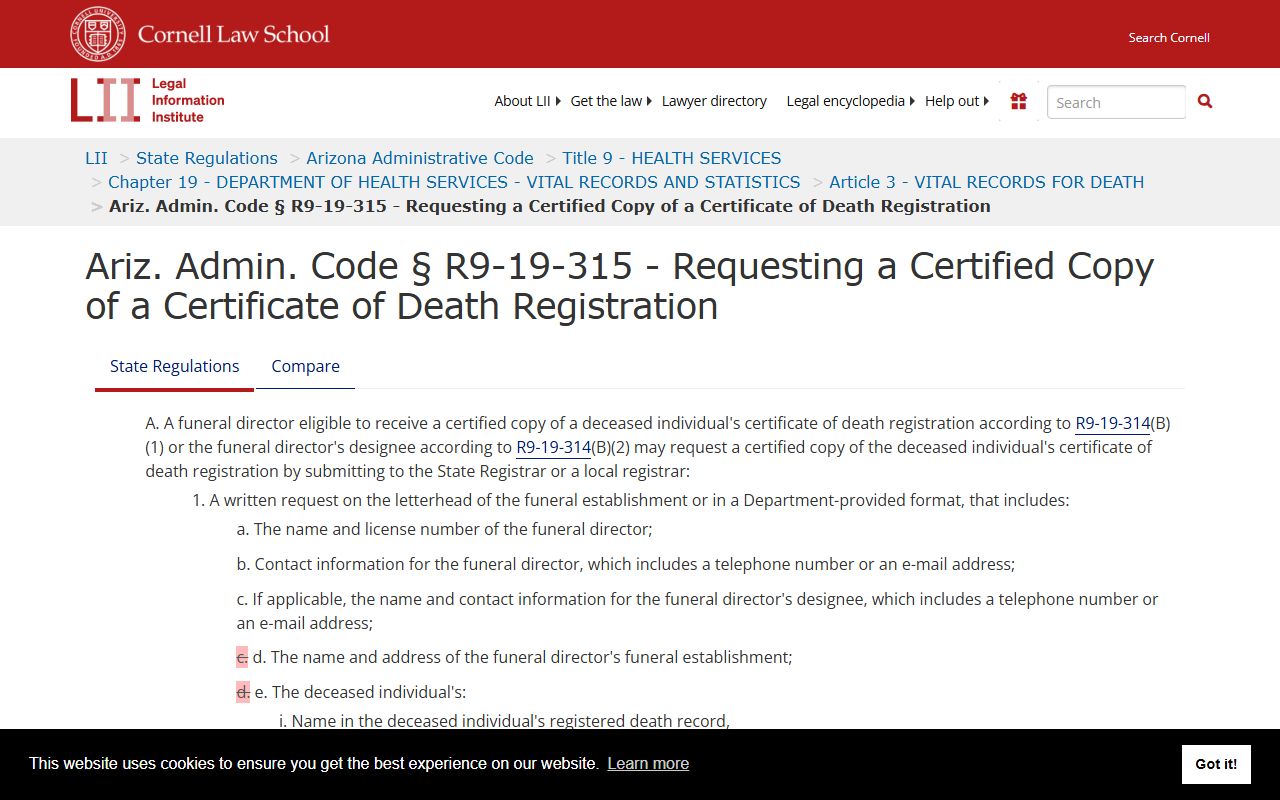
Section R9-19-315 covers how to request a certified copy. You must provide a valid government-issued photo ID. The request must be notarized, or you must submit a photocopy of the front and back of your signed ID. Applications require your original signature. Include a self-addressed stamped envelope for mail requests. Do not mail cash for payment.
How to Apply for Certificates
Use form VS-159 to request death certificates by mail. The form asks for key information about the deceased person. You need their full name as it appears on the certificate. Provide the date of death if known. List the county where death occurred. Include the deceased person's date of birth if possible. More details help locate the right record faster.
Fill out your contact information completely. Write your full name, mailing address, phone number, and email. State your relationship to the deceased. Mark how many certified copies you need. Each copy costs $20. Calculate your total and include payment. The bureau accepts Visa, Mastercard, American Express, and Discover cards. Money orders work well for mail requests. Do not send cash through the mail.
Sign and date the application. Your signature must be original, not photocopied or stamped. Attach proof of your relationship to the deceased. Birth certificates work for children requesting parent's records. Marriage certificates prove spousal relationship. Court documents show executor status. Include a clear photocopy of both sides of your valid government photo ID. If you skip the ID, you must have your signature notarized by a notary public in Arizona or your state.
Mail everything to PO Box 6018, Phoenix, AZ 85005. Include a self-addressed stamped envelope for return mail. Applications typically process within five to ten business days from receipt. Incomplete applications take longer. Missing information causes delays. Check your application twice before mailing it to the bureau in Phoenix.
Fees and Payment Options
Certified death certificates cost $20 each. This is the standard fee at both state and county offices. You pay $30 for corrections or amendments to existing records. Non-certified copies for genealogy research cost $5. These genealogy copies lack the official seal and signature. They work fine for family history but not for legal purposes or settling estates.
VitalChek handles expedited online orders. Call them at 888-816-5907 or visit their website. They charge the $20 state fee plus their own service fees. Processing goes faster through VitalChek. Your certificate ships within a few business days. Overnight delivery costs extra. This option works best when you need a certificate quickly and can pay the additional charges.
Payment methods vary by location. The state bureau accepts all major credit cards and money orders. County offices differ. Some take personal checks. Others refuse them. Greenlee County only accepts cash and money orders. La Paz County takes checks and money orders but no credit cards. Apache County takes credit cards but no cash. Check with your specific county office before visiting to avoid payment problems.
Note: Credit card transactions may include processing fees at some county locations in Arizona.
What Death Certificates Show
Arizona death certificates contain specific information. The certificate lists the full name of the deceased person. It shows their date of birth and date of death. The place of death appears with city and county. Social security number is recorded. The certificate lists the deceased person's residence address, marital status, and occupation.
Medical information fills the middle section. Cause of death comes from the medical certifier. This can be a physician, medical examiner, or coroner. The certificate distinguishes between immediate cause and underlying conditions. It notes if an autopsy was performed. Manner of death appears as natural, accident, suicide, homicide, or undetermined. The medical certifier signs and dates this section.
Parent information appears on the certificate. The deceased person's father's name is listed with place of birth. The mother's maiden name appears with her birthplace. This helps genealogists trace family lines. Informant details show who provided the death information. This is usually a family member or funeral director. The certificate includes the burial or cremation location and the funeral home that handled arrangements.
Old Death Records in Arizona
Death registration in Arizona began before statehood. Some records exist from 1870. Formal registration started in 1909 when Arizona was still a territory. Records from the territorial period are rare and incomplete. Coverage improved after Arizona became a state in 1912. By the 1920s, most deaths were registered properly.
The Arizona State Library, Archives and Public Records holds historical death records. They maintain records over 50 years old. You can search these at the library in Phoenix. Some are available online through the genealogy database. Ancestry.com also has Arizona death records from 1881 to 1971. Arizona residents can access Ancestry for free through the state library system.
Older records may have less information than modern certificates. Handwriting can be hard to read. Some details might be missing or unclear. Cause of death descriptions used old medical terms. Locations might show old place names no longer in use. Despite these limits, old death records provide valuable details for family history and genealogy research in Arizona.
Other Death Record Resources
The Arizona State Library offers research help for genealogists. Visit their guide at azsos.libguides.com for tips on finding birth and death records. The guide explains what records exist and how to access them. It covers both online databases and physical archives. Library staff can answer questions about historical records and research methods.
County medical examiners and coroners maintain separate records for certain deaths. When someone dies under suspicious circumstances, the medical examiner investigates. Their reports include autopsy findings and investigation notes. These records are distinct from death certificates. Contact the county medical examiner's office directly for investigation records. Fees and access rules vary by county in Arizona.
Social Security Death Index provides another search option. This federal database lists deaths reported to Social Security. It covers deaths from the 1960s forward. The index shows name, birth date, death date, last residence, and where the social security card was issued. Several websites offer free searches of this database. Use it to verify dates and locations before ordering certificates from Arizona.
Note: The Social Security Death Index does not replace official state death certificates for legal purposes.
Arizona Death Records by County
Each of Arizona's 15 counties maintains a vital records office. These locations provide certified death certificates for the entire state. You can visit any county office regardless of where the death occurred.
Death Records in Major Arizona Cities
Residents of major cities obtain death certificates through their county vital records office. Select your city below to find contact information and local resources.